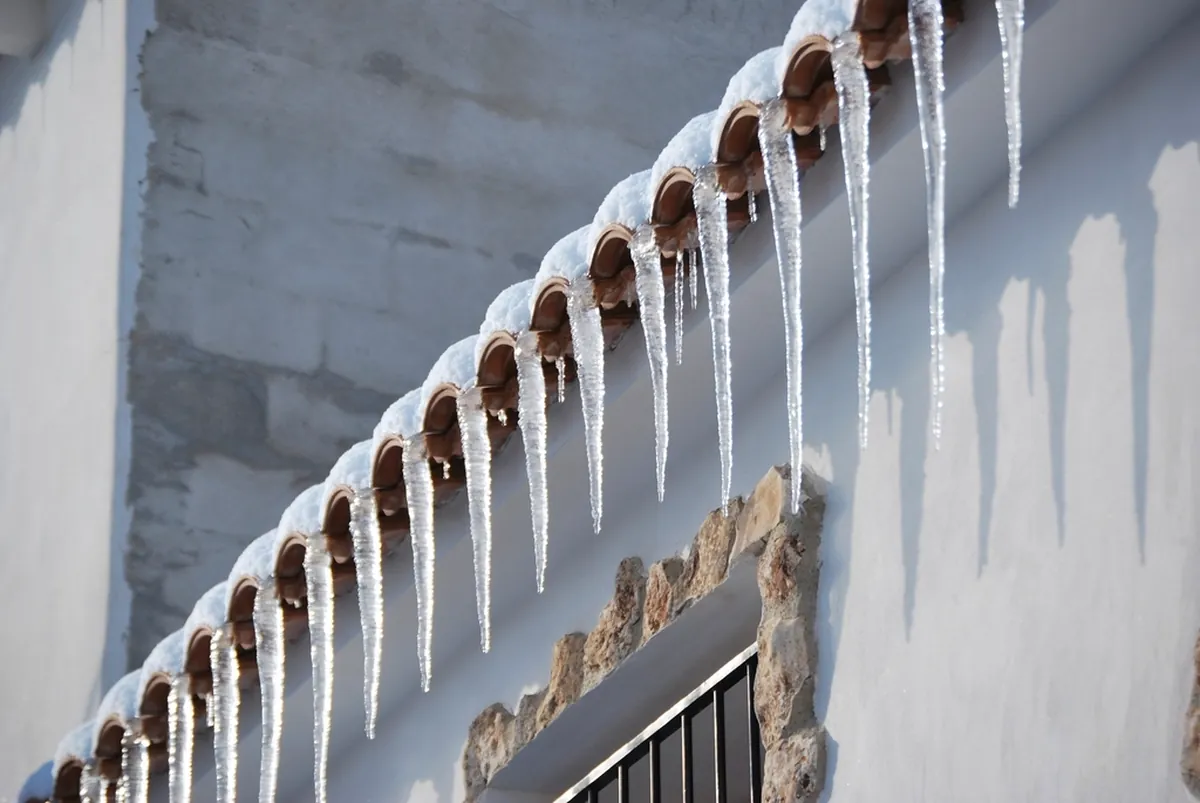
Pennsylvania winters are rarely gentle on houses. Heavy snow followed by a thaw and another hard freeze is a recipe for ice dams on the roof and split pipes in the walls. The Blizzard of 1993, the January 1996 storm, the Valentine’s Day 2007 ice storm, the back-to-back snowstorms of February 2010 and Erie’s Christmas 2017 lake-effect snow — more than 60 inches in about two days — all produced waves of winter claims. Every cold snap since has added more.
These claims are often accepted but underpaid. Here is how they typically work and where the valuation fights tend to happen.
How ice dams cause damage
Heat escaping from the living space warms the roof deck and melts snow on the upper roof. The meltwater runs down to the colder eaves and refreezes, building a ridge of ice. More meltwater pools behind that ridge, works under the shingles and leaks into soffits, walls and ceilings.
Older Pennsylvania housing is especially prone: Victorian homes in Scranton and Erie with complex rooflines, Cape Cods with little attic ventilation, and rowhomes with flat or low-slope roofs where water has nowhere to go.
Coverage questions
Many homeowner policies cover sudden water damage from an ice dam, though some limit or exclude damage to the roof itself or to gutters. Insurers may also argue the damage is long-term leakage or a maintenance issue. Those are coverage arguments; if you face one, talk to a Pennsylvania attorney. When the insurer accepts the claim, the dispute shifts to scope and cost.
How frozen pipes cause damage
Water expands as it freezes. A pipe in an exterior wall, crawlspace or unheated garage can split, and the leak often doesn’t show until the ice thaws. By then water may have run for hours inside walls, under floors or into a finished basement.
Policies commonly cover sudden and accidental discharge from plumbing but may exclude freezing damage if the home was vacant or unheated and the owner didn’t take reasonable steps such as keeping heat on or draining the system. Read that condition closely if you own a second home, a rental near State College or a property between tenants.
Where estimates usually fall short
- Hidden moisture. Water travels farther than it looks. Moisture readings and thermal images help prove how much drywall, insulation and subfloor got wet.
- Plaster and lath. Many older Pennsylvania homes have plaster walls, which cost more to repair than drywall and are often priced as if they were drywall.
- Hardwood floors. Cupping can show weeks after drying. Whether to refinish, replace a section or replace the full run is a frequent dispute.
- Roof edge repairs. After an ice dam, the question may be whether to replace damaged shingles, add ice-and-water shield to meet current code, or replace slopes for a reasonable match.
- Access and tear-out. Opening walls and ceilings to reach a pipe, then closing and finishing them, adds up quickly.
- Overhead and profit. A winter water loss can involve plumbers, mitigation crews, drywall finishers, painters and flooring installers — the kind of multi-trade project where a general contractor is reasonable.
Snow load and roof collapse
February 2010 showed what heavy, wet snow can do to flat and low-slope roofs, porches and older outbuildings such as bank barns. Collapse claims bring structural engineering, temporary shoring and sometimes code upgrades into the estimate. If you’re worried about a roof before the next storm, our roof snow load estimator gives a rough sense of the weight involved.
Working the claim
- Report the loss promptly and keep a log of every call and visit.
- Get a written scope from a contractor who will walk the whole house, not just the visible stain.
- Compare that scope to the insurer’s estimate line by line.
- Ask for a supplement with photos and moisture data.
- If the gap remains and coverage is accepted, consider appraisal.
Keep your deadlines in view. Many Pennsylvania property policies require a lawsuit within one year of the date of loss, and appraisal may not pause that clock unless the policy or a written agreement says so. If you’re close, call an attorney.
Our ice dam and frozen pipe appraisal service focuses on exactly these winter losses, and our insurance estimate audit can show where an existing estimate is thin before you decide on appraisal.