The math behind the result
A sloped roof has more surface than the footprint under it. The pitch multiplier is √(1 + (rise ÷ 12)²). An 8/12 roof — common on Pennsylvania farmhouses and older two-story homes — is about 20% larger than its footprint; a 12/12 roof is about 41% larger.
Five things to check in the carrier’s roof section
- Total squares and the waste percentage used.
- Steep-slope charges, often starting around 7/12 or 8/12.
- High-roof or two-story access charges.
- Separate lines for ridge cap, starter, drip edge, ice and water shield and valley metal.
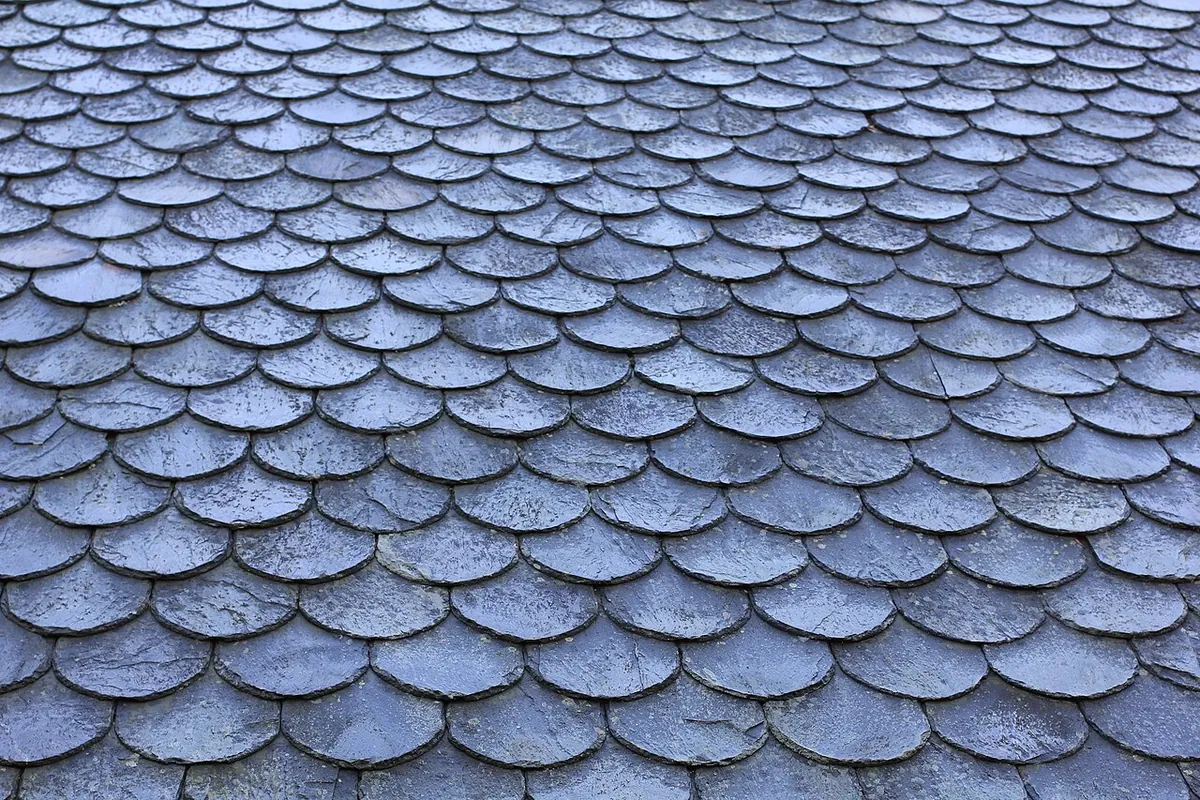
- Whether a slate or flat-roof section was priced as ordinary asphalt shingles.
Where a footprint estimate falls short
Cut-up roofs with several pitches, dormers and valleys need to be measured plane by plane. Rowhome flat roofs need a low-slope (5%) waste figure instead. Treat this as a sanity check alongside a field measurement or aerial report.
Questions about this calculator
What is a roofing square?
One hundred square feet of roof surface. Many two-story Pennsylvania homes fall somewhere between 18 and 35 squares, but sizes vary widely.
Why does waste change with roof style?
Hips, valleys and dormers require more cutting, and slate breakage adds more, so more material ends up as scrap.