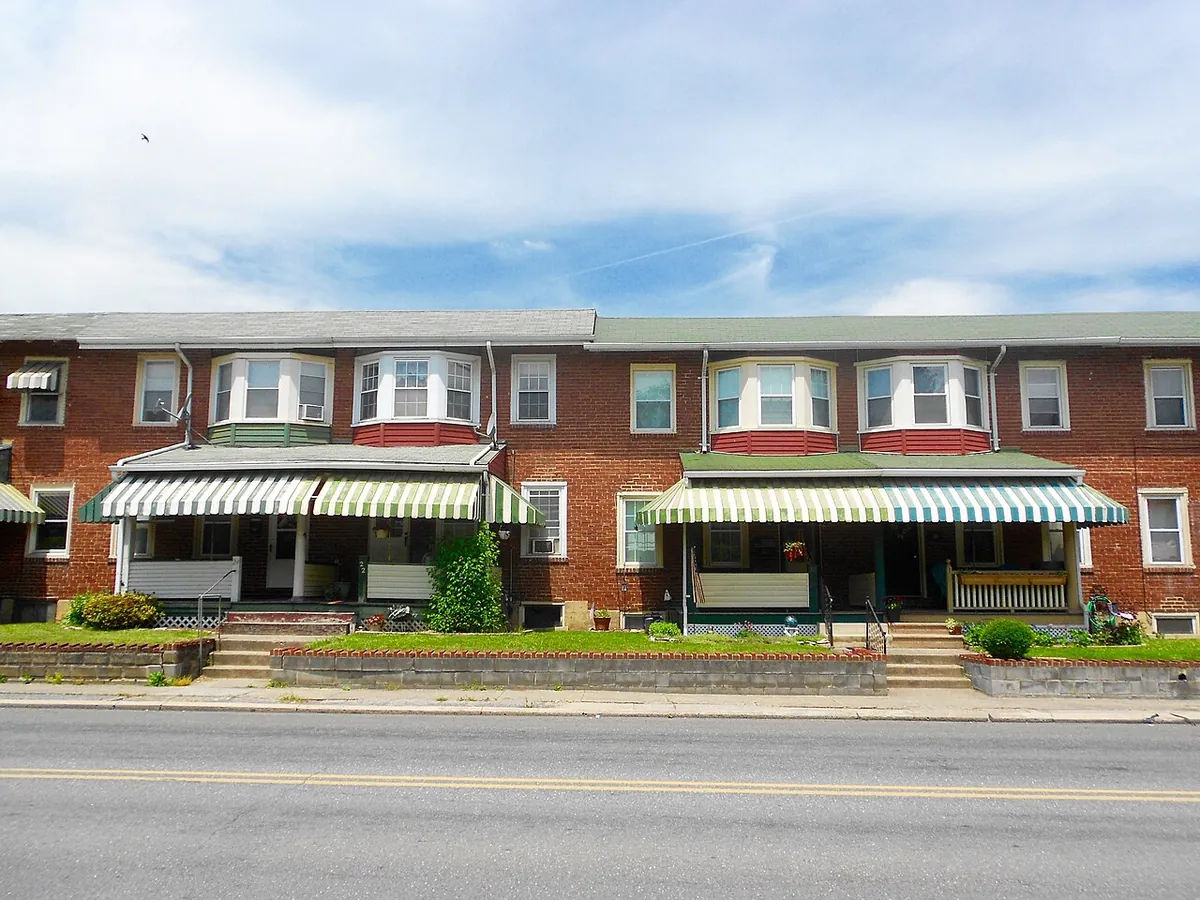
Rowhomes define the streetscape in Philadelphia, Reading, York and Harrisburg. Most have low-slope roofs covered in modified bitumen, built-up layers or a newer membrane, and they share party walls with the neighbors on one or both sides. When a summer thunderstorm, a nor’easter or a winter freeze damages one of these roofs, the claim brings problems a detached house simply doesn’t have.
How rowhome roofs fail
Flat roofs aren’t really flat; they’re pitched gently toward a drain, scupper or gutter at the rear. Damage usually comes from a few sources:
- Wind. Gusts lift seams and edges, peel back flashing at parapets and tear membrane at the front cornice.
- Hail and falling debris. Branches, chimney caps and neighbors’ rooftop equipment can puncture the surface.
- Ponding and ice. Clogged drains let water sit; freeze-thaw cycles open cracks and seams.
- Fire. Rooftop fires or fire next door can scorch membrane and damage the deck.
Leaks often show up far from the actual opening, because water travels along the deck and joists before dripping through a ceiling. That makes careful inspection more important than on a sloped roof.
The party wall problem
On a row of attached homes, the roof membrane often runs continuously across property lines, and flashing laps onto the parapet or the neighbor’s roof. When one section is damaged, the repair may need to tie into adjoining roofs.
Questions that come up
- Does the scope include cutting back and properly tying into the neighbor’s roof, with new flashing at the joint?
- Is the parapet or party wall itself damaged, and if so, whose policy responds?
- Are there access charges for working across adjacent roofs?
- Does interior damage extend into a shared wall cavity?
Responsibility for shared structures can involve neighbors, their insurers and sometimes local rules. Those can become legal questions; a Pennsylvania attorney is the right person for them.
Where the estimate usually falls short
Insurer estimates for rowhome roofs often price a patch when a larger repair is needed. Common gaps include:
- Patch versus replacement. Modified bitumen ages and shrinks. A patch on brittle, multi-layer roofing may not hold, and many roofers won’t warranty one.
- Tear-off layers. Older rowhomes may have several layers of roofing. Removing them, and disposing of them, costs more than the estimate assumes.
- Deck repair. Wet or rotted decking under the membrane must be replaced before new roofing goes on.
- Code items. Re-roofing may trigger insulation or edge requirements. Building code upgrade coverage — often called ordinance or law — may pay for some of this, subject to its own limit.
- Interior finishes. Plaster ceilings, crown moulding and older trim in rowhomes cost more to restore than the generic drywall line items often used.
- Access. Narrow streets, no rear alley and limited staging areas add labor and equipment costs, including hoisting and permits for dumpsters.
Measuring and pricing low-slope roofs
Low-slope roofing is priced by the roof square, like any other roof, but parapet walls, curbs, skylights and drains add flashing and labor that a simple area measurement misses. Make sure the estimate captures the perimeter, every penetration and the transitions to neighbors. Our roof pitch and squares estimator helps sanity-check area figures.
When appraisal fits
If the insurer agrees the roof was damaged by a covered peril but the estimate covers only a patch, that is a classic amount-of-loss dispute. Appraisal can resolve the scope and price. If the insurer says the damage is wear and tear, that’s closer to a coverage or causation question, and you may need a Pennsylvania attorney.
Before you decide, gather your contractor’s written scope, photos of the whole roof and interior, the insurer’s estimate and any engineer’s report. Then compare them line by line. Our roof and hail damage appraisal service handles low-slope and rowhome roofs, and our Philadelphia page covers the city’s housing in more detail.
As always, keep the suit-limitation date in view. Many Pennsylvania property policies require a lawsuit within one year of the date of loss, and appraisal may not pause that clock.